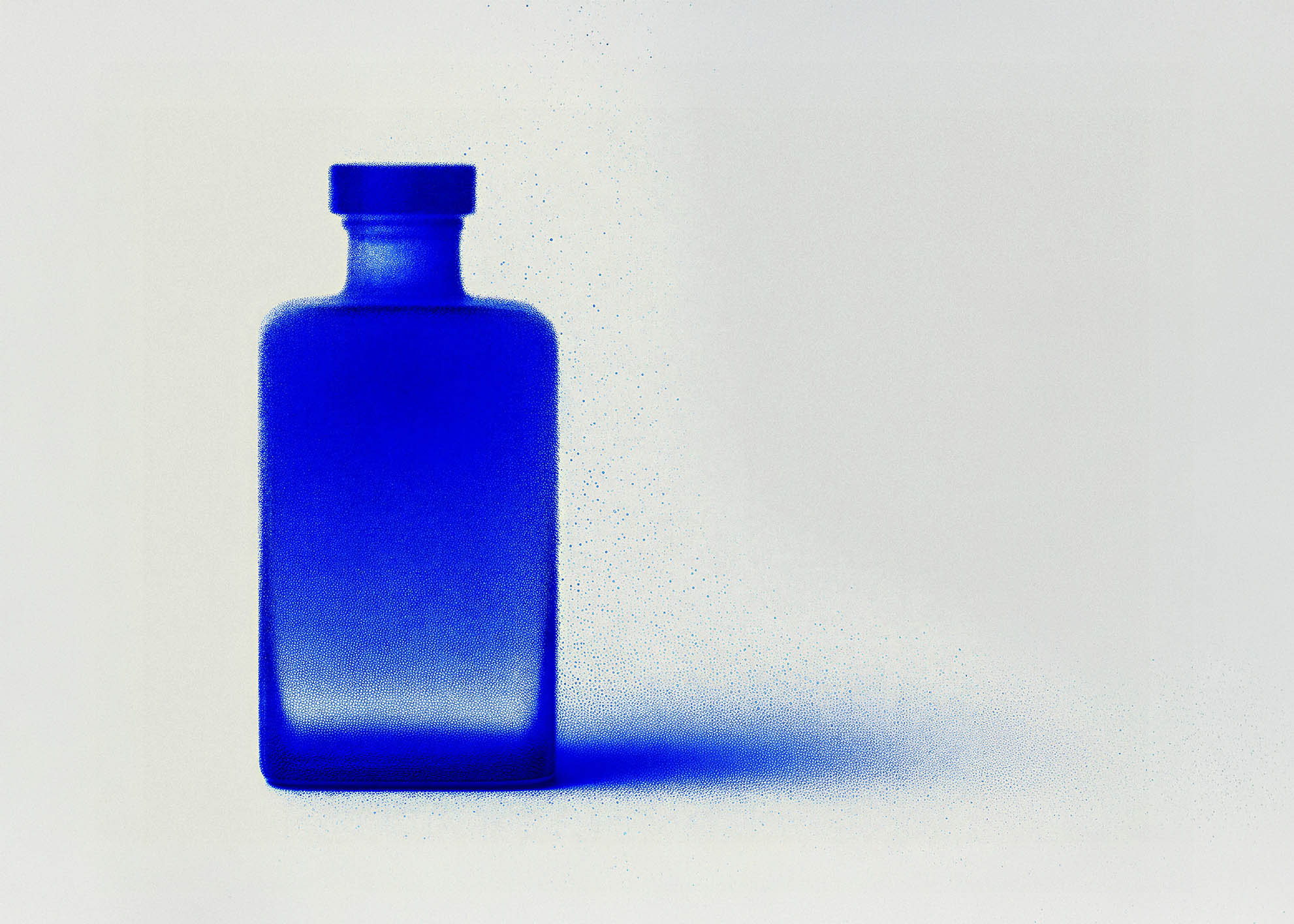
When luxury brands ask us about our process, they usually start with one question: “How much of this is actually AI?“
It’s the right question. The photography industry is flooded with fully automated solutions promising perfect product shots at the click of a button. We’ve tested them. Most produce generic imagery that might work for a marketplace listing, but falls short of premium brand standards.
Our answer is straightforward: AI is a powerful tool in our workflow, but it’s never the entire workflow. Every image we deliver for clients like Rémy Martin, Hibiki Suntory, or Cluse involves human expertise at multiple critical stages. The AI enhances our capabilities—it doesn’t replace them.
This article walks through our actual process, from initial brief to final delivery. No marketing fluff. Just the real workflow we use to create premium product photography for luxury brands.
The Foundation: Professional Photography Expertise
Before we touch any AI tool, we begin exactly where traditional photographers begin: understanding light, composition, and brand identity.
When Suntory approached us for their Hibiki Japanese Harmony whisky campaign, we didn’t start by prompting an AI. We studied their existing brand guidelines, analyzed their visual language, researched Japanese aesthetic principles of harmony and simplicity, and mapped out lighting schemes that would emphasize the geometric precision of their iconic 24-faceted bottle.
This foundation work determines everything that follows. We’re creating a detailed creative brief that includes specific technical parameters: camera angles, focal lengths, lighting ratios, color temperature, composition rules. These specifications come from years of professional photography and design experience, not from AI.
The luxury spirits photography we do requires understanding how light interacts with glass and liquid, how to capture the depth of amber tones in cognac, how to maintain brand consistency across a campaign. These are photography fundamentals that AI tools don’t inherently understand—they need expert direction.
Our Primary AI Tool: Midjourney
We work primarily with Midjourney for our AI-enhanced image generation. After extensive testing of various platforms, we’ve found it offers the best combination of aesthetic quality and technical control for premium product photography.
But here’s what most people don’t understand about using Midjourney professionally: the difference between amateur results and professional output comes down to prompt engineering expertise.
When we create an image for a luxury brand, our Midjourney prompts aren’t simple descriptions like “whisky bottle on dark background.” They’re highly technical specifications that might include:
- Specific camera equipment references (Phase One IQ4, Hasselblad H6D)
- Precise lens specifications (80mm medium format, f/2.8)
- Detailed lighting setups (three-point lighting, rim lighting ratios, diffusion methods)
- Composition techniques (rule of thirds, golden ratio, negative space principles)
- Color grading references (specific RAW profiles, LUT references)
- Material properties (glass reflection characteristics, liquid translucency)
A prompt for the Rémy Martin XO project might specify something like:
"commercial product photography, Rémy Martin XO cognac centaur bottle, shot on Phase One IQ4 with 80mm lens at f/4, key light camera right with large softbox, rim light creating edge definition on bottle, warm color temperature 3200K, rich amber tones in liquid visible through crystal glass, minimal background with subtle texture, professional studio lighting, hyperrealistic detail, 8k resolution."This level of technical direction comes from understanding professional photography. The AI executes our vision—it doesn’t create the vision.
The Iterative Refinement Process
AI generation is never one-and-done, despite what some providers claim. Every project goes through multiple rounds of iteration.
Our typical workflow involves:
Initial Generation Phase: We create 20-30 variations based on our creative brief, testing different lighting angles, compositions, and background treatments. This gives us a range of options to evaluate.
Selection and Refinement: We identify the strongest concepts and run refined generations, adjusting specific parameters. Maybe the lighting needs to be softer, or the bottle angle needs adjustment, or the background needs more negative space. Each refinement brings us closer to the target.
Technical Optimization: Once we have the right composition and lighting, we focus on technical details. Glass reflections that don’t quite work physically. Liquid characteristics that need adjustment. Brand elements that require perfect accuracy.
For the Via Carota Craft Cocktails project, we went through seven rounds of refinement on the Classic Negroni hero shot before we achieved the exact balance of warm lighting and crystal-clear product details that matched their West Village heritage aesthetic.
This iteration process typically takes 4-6 hours of focused work per image. It’s not automated. It requires constant evaluation against professional photography standards and brand guidelines.
Professional Post-Production
The AI generation is only the beginning. Every image goes through extensive professional post-production before delivery.
This includes:
Color Correction: We calibrate colors to match brand specifications exactly. If a client’s Pantone colors need to be perfect, we handle that in post-production with professional color grading tools, not AI approximation.
Detail Enhancement: Professional retouching to ensure every element meets technical standards. Reflections that need correction. Small imperfections that need addressing. Details that need sharpening or softening.
Format Optimization: We deliver images optimized for specific use cases—high-resolution print files with proper color profiles, web-optimized versions, social media formats with platform-specific adjustments.
Quality Control: Every image goes through our multi-point quality checklist before delivery. We’re checking for technical accuracy, brand consistency, and professional photography standards.
Quality Control: The Human Element
This is where we fundamentally differ from automated solutions. Every project has multiple layers of human oversight.
Winnie, our Creative Director, reviews every image against brand guidelines and creative direction. She’s looking at composition, aesthetic quality, and brand fit—things that require human judgment and extensive experience with luxury brands.
I review the technical execution—lighting accuracy, physical plausibility, professional photography standards. We’re asking questions like: Would this lighting setup actually work in a physical studio? Do the reflections follow the laws of physics? Does this meet the quality standards of major retailers like Bloomingdale’s?
We reject images that don’t meet our standards, even if they’re “close enough.” Premium brands don’t accept close enough, and neither do we.
Real-World Example: The Hibiki Suntory Project
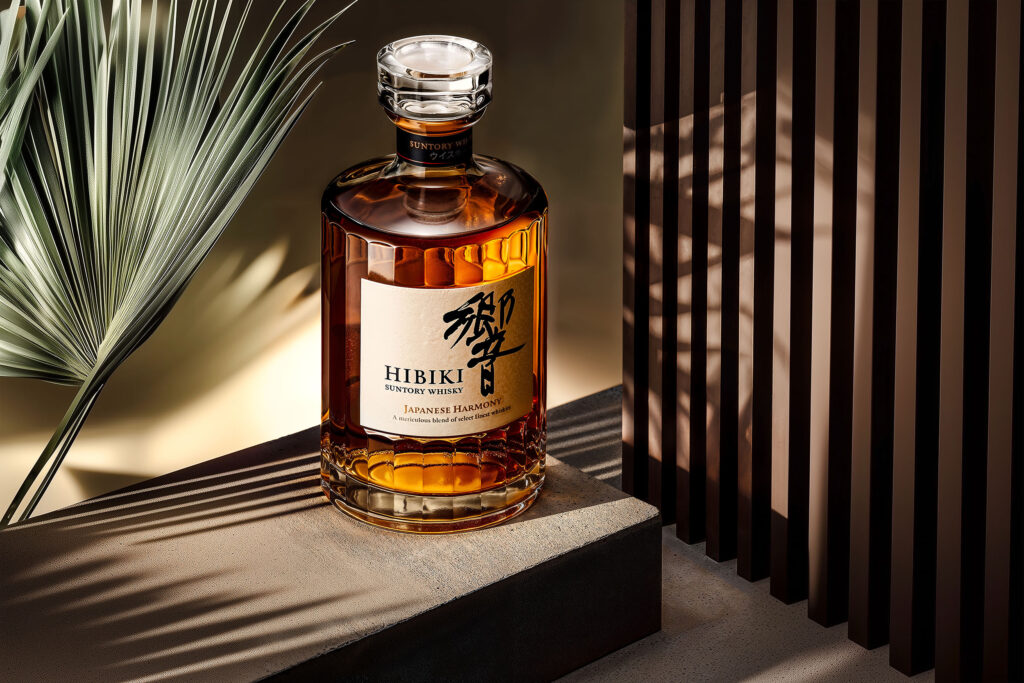
Let’s walk through a specific project to show how this workflow plays out in practice.
When we created visuals for Hibiki Japanese Harmony, the process began with research into Japanese aesthetic principles—ma (negative space), wabi-sabi (beauty in imperfection), and geometric harmony. We studied Suntory’s existing photography style and identified key visual elements: clean lines, emphasis on the 24-faceted bottle design, warm amber tones, sophisticated simplicity.
We developed detailed creative briefs for each image concept, specifying technical parameters that would honor these principles. Our Midjourney prompts incorporated specific photography techniques: subtle rim lighting to emphasize geometric edges, carefully controlled reflections to maintain clarity, warm color grading to complement the whisky’s amber tone, minimal backgrounds with subtle texture to create depth without distraction.
The initial generation phase produced multiple variations. We refined the strongest concepts through several iterations, adjusting lighting ratios, refining bottle angles, perfecting the balance of highlights and shadows. Each refinement brought the images closer to professional studio photography standards.
Post-production involved precise color correction to match Suntory’s brand palette, enhancement of the geometric facets to emphasize the bottle’s distinctive design, optimization for multiple formats (web, social, print), and final quality control against luxury spirits photography standards.
The entire process—from initial brief to final delivery—took approximately 72 hours for four hero images. A traditional photography approach would have required studio booking, product shipping logistics, a full crew, and likely 2-3 weeks from initial planning to final delivery.
Proprietary Tools and Techniques
Beyond our primary AI platform, we’ve developed proprietary techniques and tools that give us competitive advantages.
We maintain extensive reference libraries of professional photography setups, organized by product category, lighting style, and aesthetic treatment. This allows us to quickly reference proven approaches while maintaining consistency across projects.
We’ve built custom workflows for specific product categories. Spirits photography requires different approaches than cosmetics, which differs from fashion accessories. Our workflows incorporate category-specific best practices and technical requirements.
We maintain detailed technical specifications for platform-specific optimization—Instagram’s compression algorithms handle images differently than LinkedIn, which differs from print requirements. We optimize for each use case.
What We Don’t Do
Transparency requires acknowledging limitations. There are things our AI-enhanced workflow doesn’t currently handle as effectively as traditional photography.
Complex Physical Props: If your brand requires specific physical staging with unique props or complex setups, traditional photography may be better suited. We excel at clean, premium product focus—not elaborate physical set construction.
Video Content: Our current workflow is optimized for still imagery. While we create animations and cinemagraphs, we’re not producing full video content. If your project requires extensive motion video, we’ll be direct about that limitation.
On-Location Shoots: Our process works best for controlled product photography. If you need authentic location photography or lifestyle shots with real models in real environments, that’s outside our current scope.
We believe in being upfront about these limitations. It builds trust, and it ensures we’re the right fit for your project.
The Hybrid Advantage
The real power of our approach comes from combining AI capabilities with professional expertise.
AI gives us speed, flexibility, and the ability to create unlimited variations without physical constraints. We can test multiple concepts quickly, iterate rapidly, and deliver results in 48-72 hours instead of weeks.
Professional expertise gives us quality, brand accuracy, and technical precision. We understand photography fundamentals, we recognize what works and what doesn’t, we maintain premium standards, and we ensure every deliverable meets luxury brand requirements.
Neither element alone produces the results we deliver. Fully automated AI solutions lack the expertise to create premium imagery. Traditional photography without AI enhancement lacks the speed, flexibility, and cost efficiency that modern brands need.
This hybrid approach is why we can deliver images that meet Bloomingdale’s technical specifications, match Rémy Martin’s brand guidelines, and satisfy Suntory’s aesthetic requirements—all at 80% cost savings compared to traditional studio photography.
Working With Chronos Studio
Our workflow is designed for luxury brands that need premium imagery but value efficiency and flexibility.
The typical engagement begins with a detailed creative consultation where we discuss your brand guidelines, visual requirements, and project goals. We provide samples of similar work and discuss our approach for your specific needs.
For new clients, we typically recommend starting with a pilot project—usually 5 images that demonstrate our capability and ensure we’re aligned on creative direction and quality standards. This reduces risk and builds confidence in our process.
For established clients with ongoing needs, we offer monthly retainer arrangements that provide consistent creative support, priority scheduling, dedicated creative direction, and streamlined approvals.
The Future of Our Workflow
AI technology evolves rapidly. We’re constantly testing new tools, refining our techniques, and expanding our capabilities.
Current areas of development include enhanced control over physical properties (improved glass reflection accuracy, better liquid transparency rendering), expanded format capabilities (3D product visualization, interactive elements), and streamlined iteration processes (faster refinement cycles, more efficient client collaboration).
But our core principle remains constant: AI is a tool that enhances professional expertise, not a replacement for it. As the technology improves, so does our ability to deliver premium results efficiently. The human element—creative direction, technical oversight, quality control, brand understanding—remains essential.
Final Thoughts
AI-enhanced photography isn’t about replacing traditional photography. It’s about expanding what’s possible—delivering premium quality with greater speed, flexibility, and cost efficiency.
Our workflow combines the best of both worlds: AI capability and professional expertise. This hybrid approach allows us to serve luxury brands that demand premium quality while respecting the practical realities of modern marketing—tight timelines, budget constraints, and the need for high-volume content.
If your brand needs premium product photography that meets luxury standards without traditional studio costs and timelines, our workflow might be exactly what you’re looking for.
View our portfolio of luxury brand projects, or reach out to discuss how our workflow could support your specific needs