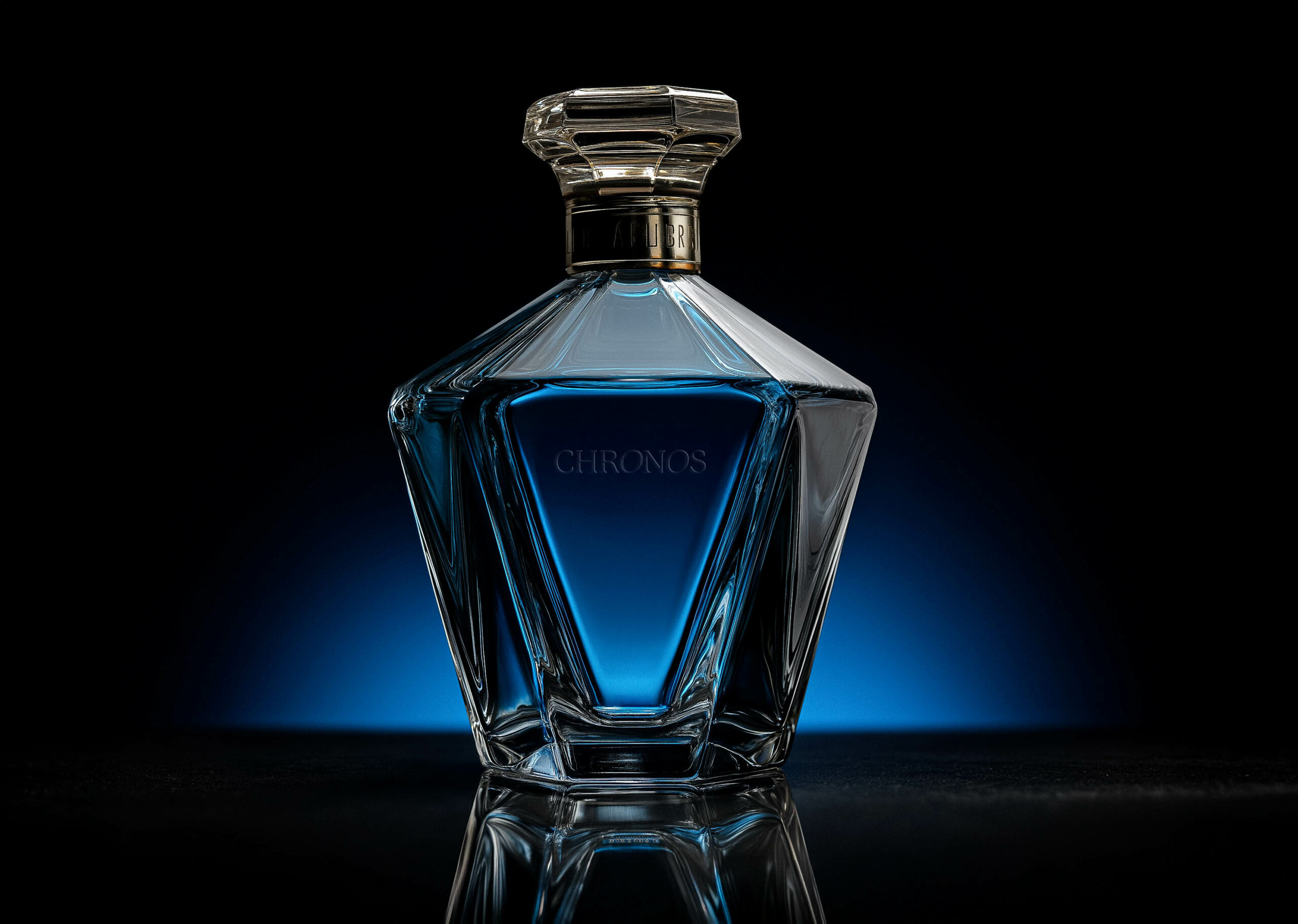
When Midjourney first emerged, we were skeptical. As photographers who’ve spent years perfecting lighting setups and mastering the subtleties of product photography, the idea of AI-generated product images seemed like a threat to craftsmanship. But after extensive testing—hundreds of hours and thousands of images—we’ve discovered something more nuanced: Midjourney is a powerful tool, but it’s exactly that: a tool. And like any professional tool, it requires expertise to use effectively.
This guide shares what we’ve learned about using Midjourney for product photography, from the technical fundamentals to the practical limitations that most tutorials won’t tell you about. Whether you’re a brand exploring AI options or a creative professional adapting to new technologies, understanding Midjourney’s true capabilities—and constraints—is essential for making informed decisions about your visual content strategy.
Understanding Midjourney’s Role in Product Photography
Midjourney is a generative AI platform that creates images from text descriptions (called “prompts“). Unlike traditional photography, which captures physical products with cameras and lighting, Midjourney synthesizes images based on patterns it learned from millions of existing photographs.
For product photography, this creates an intriguing possibility: generating professional-looking product visuals without physical shoots, studio time, or complex logistics. The technology has advanced remarkably since its early versions, with Midjourney v6 and beyond showing impressive capabilities for realistic rendering, accurate lighting, and sophisticated compositions.
But here’s what most discussions miss: Midjourney doesn’t replace product photography—it transforms how certain aspects of it can be approached. The distinction matters, especially for brands with specific quality standards or regulatory requirements.
What Midjourney Excels At
Through our work with luxury spirits brands, cosmetics companies, and fashion labels, we’ve identified where Midjourney truly shines:
Concept visualization and mood boards. Before committing to expensive shoots, Midjourney can rapidly generate dozens of compositional concepts. We’ve used it to explore different seasonal themes for whisky brands, testing visual directions in minutes rather than days.
Environmental variations. Need your product photographed in ten different settings? Midjourney can generate variations far faster than traditional shoots. This works particularly well for lifestyle contexts where the environment matters more than minute product details.
Creative exploration. The AI’s ability to combine unexpected elements often sparks creative directions we wouldn’t have considered. We’ve discovered compelling visual metaphors and styling approaches through Midjourney experiments that later informed our professional shoots.
Rapid iteration. Clients can see multiple visual directions before final production decisions. This dramatically reduces revision cycles and ensures everyone aligns on creative direction.
How to Use Midjourney for Product Photography: A Practical Guide
Let’s get into the technical details. Using Midjourney effectively for product photography requires understanding both the tool’s capabilities and the photographic principles that create professional results.
Setting Up for Success
First, you’ll need a Midjourney subscription (the basic plan starts at $10/month, but serious work requires the Standard plan at $30/month for “unlimited” generations). Midjourney operates through Discord, which feels unusual at first but becomes intuitive quickly. Now there is also the official website.
The critical foundation: your prompts must think like a photographer. Generic descriptions produce generic results. Professional product photography involves specific decisions about lighting, composition, focal length, and styling—your Midjourney prompts need to reflect this expertise.
Crafting Effective Product Photography Prompts
Here’s a prompt structure we’ve refined through extensive testing:
[Product] + [Style/Context] + [Lighting] + [Camera Settings] + [Composition] + [Mood/Quality Parameters]
For example, instead of: “luxury whisky bottle”
We write: "premium Japanese whisky bottle, minimalist composition on black granite surface, soft key light from left with subtle rim lighting, shot with 85mm lens at f/2.8, shallow depth of field, elegant reflections, commercial product photography style, high-end advertising quality --ar 16:9 --style raw --v 7"
The difference is dramatic. The first prompt gives you a generic AI-generated bottle. The second leverages photographic language to guide Midjourney toward professional results. (For more on our complete AI workflow at Chronos Studio, including how we integrate Midjourney with traditional photography techniques, read our behind-the-scenes breakdown.)
Key Prompt Parameters for Product Photography
Aspect Ratios (–ar): Control your image dimensions. Use --ar 16:9 for web headers, --ar 4:5 for Instagram feed posts, --ar 1:1 for square compositions. Understanding aspect ratios is crucial—you can’t simply crop Midjourney images without losing the carefully composed elements.
Style Raw vs. Default: The --style raw parameter reduces Midjourney’s tendency toward overly artistic interpretations, giving you more photographic realism. We use this for 95% of product work.
Stylize Parameter (–s): Lower values (–s 50 to –s 250) maintain realistic product photography aesthetics. Higher values introduce more artistic interpretation, which can work for conceptual campaigns but rarely for e-commerce or retail applications.
Quality Settings: While --quality 1 is default, we sometimes use --quality 4 for final hero images where detail matters most. The rendering time increases, but so does detail refinement.
Advanced Techniques for Professional Results
Image Prompting: Midjourney allows you to reference existing images as starting points. For brands with established visual identities, you can upload reference images and use them to guide style consistency. The syntax: [image URL] [text prompt] --iw [0.5-2.0]
The image weight (–iw) determines how strongly Midjourney references the uploaded image. We typically use 0.5-1.0 for subtle style guidance, 1.5-2.0 when we need closer adherence to specific visual references.
Multi-Prompt Weighting: You can emphasize certain elements by assigning weights: premium cognac bottle::2 elegant marble background::1 soft lighting::1.5
This tells Midjourney to prioritize the bottle (weight 2) and lighting (weight 1.5) over the background (weight 1). This technique proved invaluable when creating conceptual imagery for premium spirits where product prominence needed to balance with atmospheric storytelling.
Negative Prompting: Equally important is specifying what you don’t want: --no watermark, text, logo, distortion, unrealistic reflections, extra bottles, hands, people
This prevents common AI artifacts that ruin otherwise strong images.
The Limitations Every Brand Should Understand
Here’s where most Midjourney tutorials end, but where the most critical information begins. After generating thousands of product images with Midjourney, we’ve encountered consistent limitations that impact professional use.
Accuracy and Consistency Challenges
Product Details: Midjourney struggles with specific product details—exact label text, precise logo reproduction, specific bottle shapes, or particular design elements. If your product has distinctive features that define brand identity, Midjourney will approximate rather than replicate.
We learned this working with a premium spirits brand. Their bottle has a distinctive geometric pattern on the glass. Midjourney generated beautiful images, but the pattern was always slightly different—close enough to be recognizable, but not accurate enough for commercial use where brand consistency is non-negotiable.
Series Consistency: Need five product shots that look like they’re from the same shoot? Midjourney makes this surprisingly difficult. Each generation is unique, which means matching lighting, perspective, and styling across multiple images requires extensive prompt engineering and often dozens of generations.
Text and Typography: Midjourney is notoriously poor with text. Labels will have gibberish, logos become distorted, and any copy on packaging turns into AI nonsense. For products where label information is visible, this is a dealbreaker for commercial use.
Technical Limitations for Commercial Applications
Resolution Constraints: Midjourney’s maximum resolution is 2048×2048 pixels (for square images). While upscaling options exist, professional product photography for print often requires much higher resolution. That magazine spread or billboard? You’ll need better source files.
Usage Rights and Authentication: Here’s a crucial consideration: how do you prove image authenticity? Some retailers and platforms are implementing policies requiring verification that product images accurately represent real products. AI-generated product images create authentication challenges, especially in regulated industries like cosmetics or spirits.
Color Accuracy: Professional product photography requires precise color matching to brand standards. Midjourney’s color reproduction is approximate. Those specific Pantone colors in your brand guidelines? Midjourney won’t match them exactly, and color correction in post-processing has limits when working with generated images.
Lighting Realism: Midjourney excels at creating appealing lighting, but scrutiny reveals inconsistencies—light sources that don’t make physical sense, shadows that don’t align with apparent lighting, reflections that violate basic physics. For audiences accustomed to premium photography, these subtle unrealistic elements undermine credibility. This is particularly evident when photographing dark spirits like whisky and cognac, where lighting complexity and reflection management are crucial for premium results.
Midjourney Prompt Generator
Build Your Prompt
Basic Prompt
What most people write
Expert Prompt
Your custom professional prompt
The Difference
Why expertise matters
Skip the Learning Curve
At Chronos Studio, we’ve mastered AI prompting AND professional photography. Get premium results without the trial and error.
Explore Our ServicesPro Tip: Even expert prompts can’t guarantee product accuracy or brand consistency. That’s why we combine Midjourney with professional photography for commercial-grade results. Learn about our hybrid workflow →
When Professional Expertise Becomes Essential
The most effective approach we’ve discovered combines Midjourney’s strengths with professional photography expertise. This hybrid methodology leverages AI for rapid exploration while ensuring final deliverables meet commercial standards.
The Expert-Enhanced Workflow
At Chronos Studio, we’ve developed a process that maximizes both efficiency and quality:
Phase 1: AI Concept Development We use Midjourney to generate 20-30 compositional concepts in different styles, environments, and moods. This happens in hours, not weeks, and costs a fraction of traditional concept development. Clients can see diverse visual directions and make informed decisions before significant resources are committed.
Phase 2: Professional Execution Once creative direction is established, we photograph actual products with professional equipment, precise lighting control, and expert styling. This ensures brand-accurate product representation, perfect detail capture, and consistent results across series.
Phase 3: AI-Enhanced Post-Production We then apply AI technologies—including but not limited to Midjourney—for background enhancement, environment creation, and creative effects. This combines the authenticity of real product photography with the creative flexibility of AI-generated environments.
The result: images that are unquestionably professional, brand-accurate, and commercially viable, created in 48-72 hours at roughly 80% less than traditional photography costs. For brands evaluating whether this investment makes financial sense, understanding the ROI of professional product photography becomes essential.
Real-World Applications: What Works Best
E-commerce hybrid approach: Photograph your core product with professional equipment (ensuring label accuracy, color precision, and authentic representation), then use Midjourney to generate varied lifestyle contexts. Your product remains accurate while environmental variety increases dramatically.
Seasonal campaign concepts: Use Midjourney to explore holiday themes, seasonal styling, and timely campaign concepts. The AI’s speed lets you test visual directions for Valentine’s Day, Christmas, or summer launches without premature resource commitment.
Social media content supplementation: For brands needing high-volume social content, Midjourney can generate supplementary visuals while hero shots and primary marketing materials use professional photography. This balances volume needs with quality standards.
Pitch and presentation development: Before major campaign investments, use Midjourney to visualize concepts for stakeholder approval. Once approved, execute with professional photography for final deliverables.
Midjourney Alternatives and the Broader AI Photography Landscape
While Midjourney dominates discussions, several alternatives offer different strengths for product photography:
DALL-E 3 provides more precise prompt adherence and slightly better text rendering, though it still struggles with accurate typography. Its integration with ChatGPT makes prompt refinement more conversational.
Stable Diffusion offers more control through customizable models and fine-tuning capabilities. For brands willing to invest in technical setup, it can be trained on specific product images for more consistent results.
Adobe Firefly prioritizes commercially safe generation (trained only on licensed Adobe Stock imagery) and integrates seamlessly with Photoshop for professional workflows.
However, each platform shares Midjourney’s fundamental limitations: approximation rather than replication, consistency challenges, and the gap between “impressive” and “commercially flawless.”
Making the Right Choice for Your Brand
The decision between pure AI generation, traditional photography, or hybrid approaches depends on several factors:
Budget and Timeline: If you need 50 product variations yesterday with a limited budget, Midjourney offers unprecedented speed and cost-efficiency. For a major campaign launch where brand representation is critical, professional photography remains essential.
Product Complexity: Simple products in conceptual contexts work well with Midjourney. Products with intricate details, specific branding elements, or regulatory requirements for accuracy need professional photography.
Usage Requirements: Social media exploration and concept testing suit AI generation. Print campaigns, retail imagery, and materials requiring authentication demand professional execution.
Brand Standards: Luxury and premium brands typically maintain higher visual consistency standards that currently exceed AI capabilities without expert intervention. Emerging brands with flexibility might embrace AI aesthetics more readily.
At Chronos Studio, we believe the future isn’t choosing between AI and traditional photography—it’s integrating both intelligently. Midjourney is remarkably powerful for what it does well, but premium product photography requires expertise that extends beyond prompt engineering. You can see this approach in action across our portfolio, from craft cocktails to premium gin brands.
Conclusion: Expertise Meets Innovation
Midjourney has democratized certain aspects of visual creation, but it hasn’t eliminated the need for photographic expertise—it’s changed what that expertise means. Understanding lighting, composition, brand storytelling, and commercial requirements matters more than ever, because these skills determine whether AI tools produce generic approximations or premium results.
For brands serious about product photography that converts, builds credibility, and maintains brand integrity, the question isn’t “AI or traditional photography?” It’s “How do we leverage both effectively?”
If you’re navigating these decisions, we’re here to help. At Chronos Studio, we’ve spent hundreds of hours mastering Midjourney and other AI tools specifically for product photography, understanding both capabilities and limitations through real client projects. More importantly, we combine that AI expertise with professional photography backgrounds in luxury spirits, cosmetics, and fashion.
Ready to explore what’s possible for your brand? Whether you’re curious about Midjourney capabilities, need hybrid AI-enhanced photography, or simply want expert guidance on the most efficient approach for your specific products, let’s talk. We’ll help you create product imagery that’s both innovative and authentically premium—learn more about our services or schedule a consultation to discuss your specific needs.
For more insights on product photography, AI technology, and visual branding for luxury brands, explore our complete insights library.