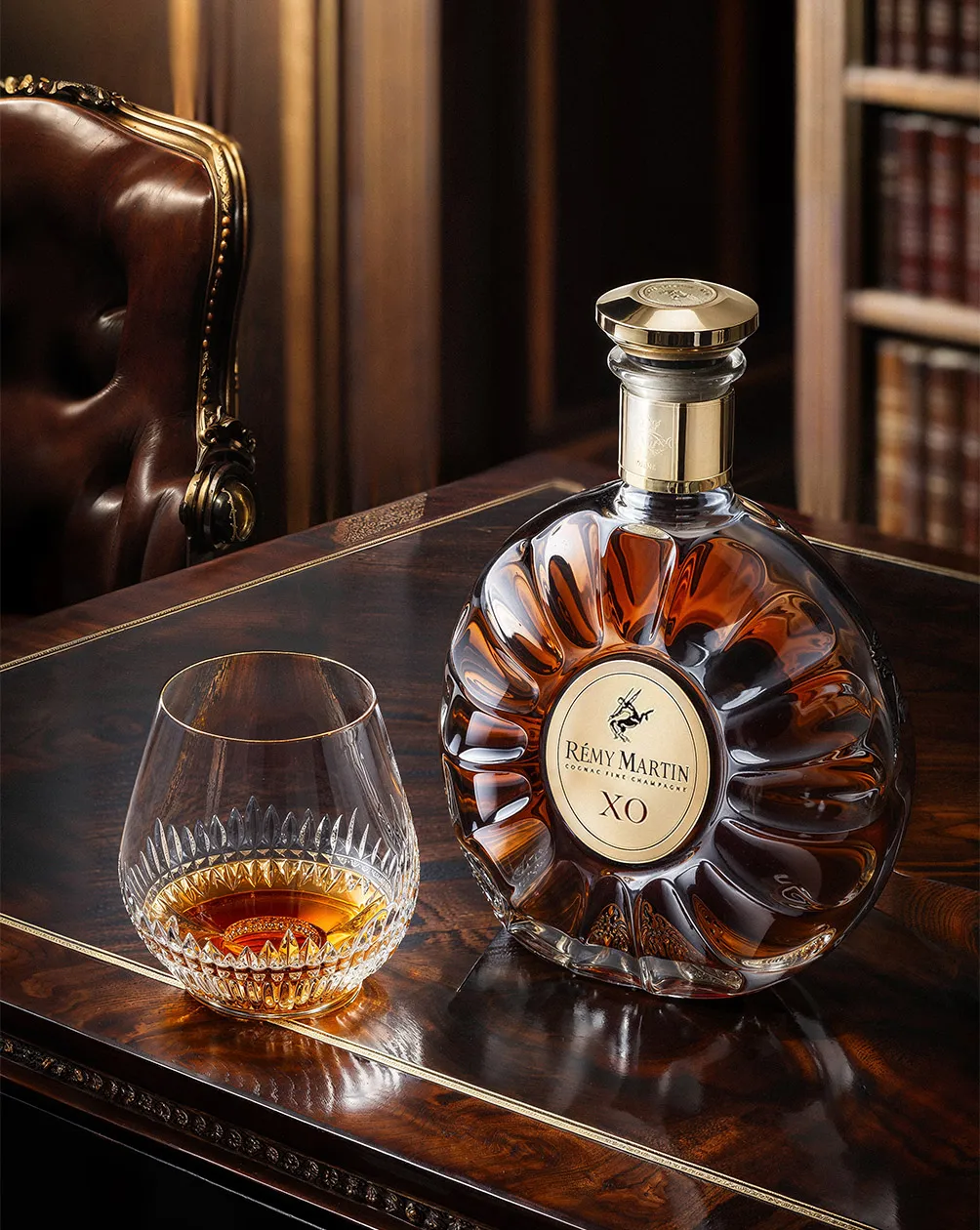

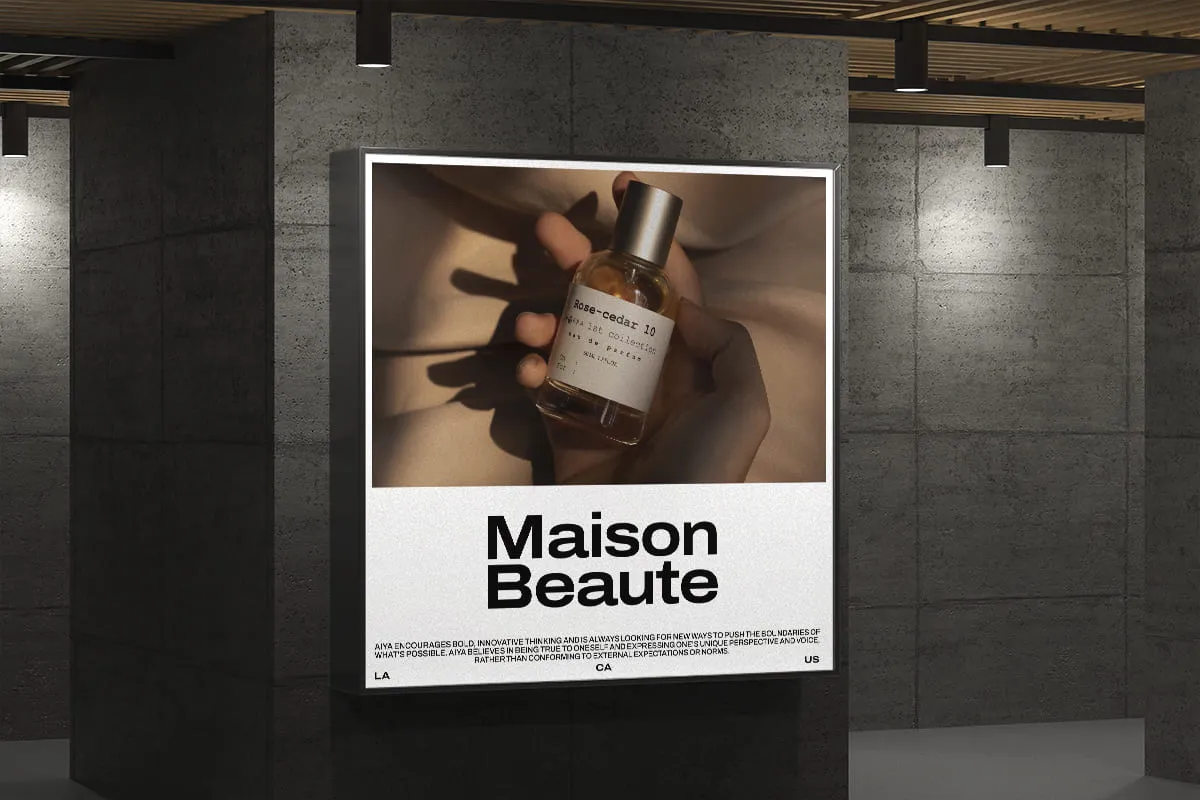
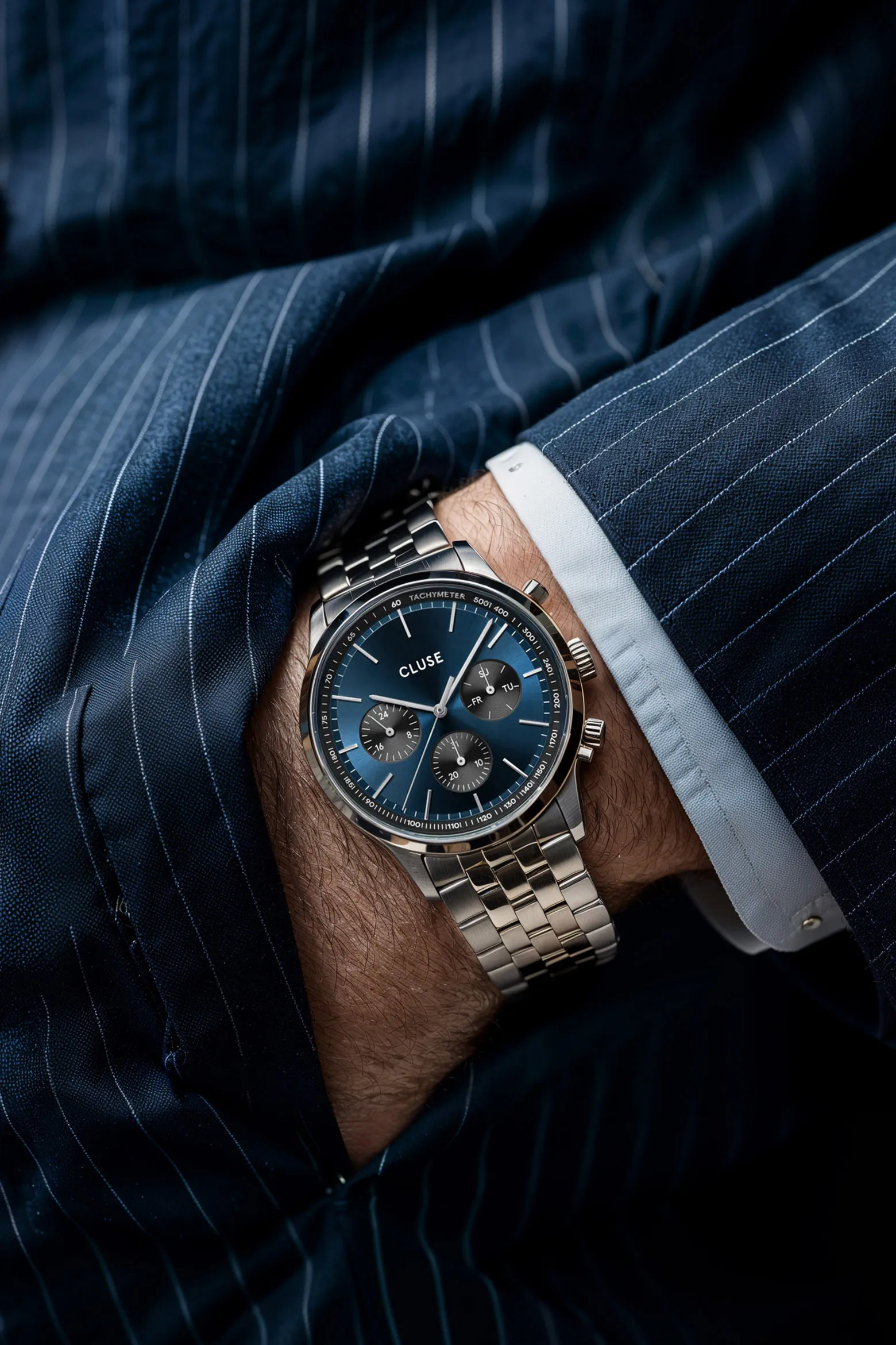
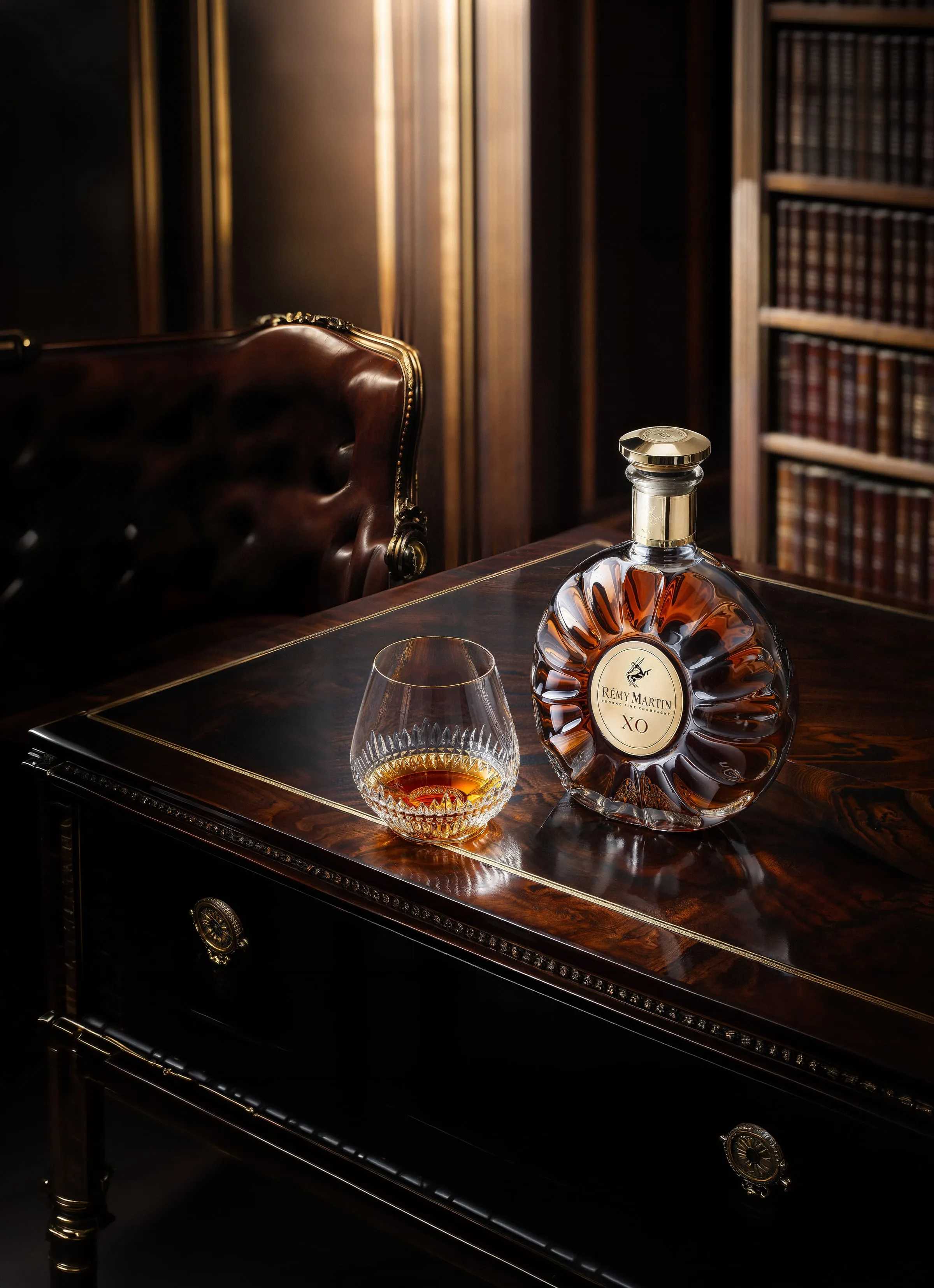
When brands ask us about AI product photography, the question underneath the question is almost always the same: if the tools are cheap — or free — why does this cost anything at all?
It's a fair thing to wonder. Google's Nano Banana Pro, one of the best image models available right now, is free to use in the Gemini app with generous limits. Anyone can open it and generate a bottle on a marble surface in thirty seconds. So when a studio quotes real money for AI-enhanced work, the reasonable reaction is: what am I paying for that I couldn't do myself for nothing?
This article answers that directly — not with positioning, but with a line-by-line teardown of the invoice. We'll take a traditional product shoot apart cost centre by cost centre, then rebuild it the AI-enhanced way and show you exactly what disappears, what shrinks, and what stays the same. The short version: the AI is the cheapest line on the page. What you pay for is everything the tool can't do on its own.
What you're actually paying for
In AI-enhanced product photography, you are paying for professional creative direction, technical judgment, and finishing — the same expertise a traditional studio sells — minus the physical cost of a studio, a crew, and a logistics chain. The AI accelerates the production steps that used to eat days; it does not supply the taste, the brand understanding, or the retouching standard that make an image usable for a premium brand. In practice, the model is a fast, cheap instrument in the hands of people who know what "premium" looks like and how to get there.
Hold that definition in mind as we go through the numbers, because every line below either confirms it or explains it.
The traditional invoice, line by line
A traditional luxury product shoot rarely costs what the headline day rate suggests. The quoted figure is the entry point; the real total is what's around it. Here's what a premium shoot actually contains.
The photographer's creative fee and day rate. For luxury product work, professional studios and photographers typically charge somewhere between $2,500 and $8,000 per shoot day, with major markets like New York sitting at the top of that band. A comprehensive brand project often runs two to five shoot days.
The crew. A serious shoot is rarely one person. Budget for a photographer plus at least an assistant and, for lifestyle or styled work, a stylist and possibly a set designer. Each is a line item.
Studio and equipment. If the space isn't the photographer's own, studio rental is one of the most commonly overlooked costs — commonly $500 to $2,000 per day, or $50 to $200 per hour, before lighting, backdrops, and modifiers are factored in.
Set, props, and styling. Physical surfaces, backdrops, glassware, foliage, and hand-built environments all have to be sourced, bought or rented, and built on set.
Product shipping and logistics. Your products have to physically reach the studio and come back. For fragile spirits, cosmetics, or fashion pieces, that's cost, insurance, and time.
Retouching and post-production. This is frequently as expensive as the shoot itself. Per-image retouching commonly runs $30 to $150, with compositing and complex clean-up climbing past $300 per image.
Multi-format adaptation. E-commerce, social, wholesale decks, and print each want different crops, ratios, and resolutions. Traditionally, that's additional post-production time per format.
The rush premium. Need it fast? Compressed timelines routinely carry a surcharge in the region of 50% on standard rates.
Usage and licensing. A full commercial license isn't always included. Expanded usage — national advertising, packaging, high print runs — can carry separate licensing fees.
The hidden line: your own hours. None of the above counts the ten-odd hours of internal time spent coordinating the shoot, shipping product, reviewing selects, and managing delivery. Industry cost breakdowns consistently find the real per-image cost lands close to double the quoted rate once every line is added in — a $40 image quietly becoming $84.
Stack it up and the arithmetic is unforgiving. A complete visual library from a traditional workflow commonly runs $15,000 to $50,000, and a brand with 500 SKUs can spend $125,000 to $250,000 a year keeping its catalogue current — because traditional cost scales almost linearly with catalogue size. Double the products, roughly double the spend. And the calendar cost is real too: four to eight weeks from concept to final delivery is normal.
The same invoice, AI-enhanced
Now take the exact same invoice and rebuild it the AI-enhanced way. The useful thing isn't a new set of numbers — it's watching what happens to each existing line. Every cost centre falls into one of three buckets: eliminated, shrunk, or unchanged.
| Traditional cost centre | AI-enhanced status | Why |
|---|---|---|
| Studio day rate (space) | Eliminated | No physical stage to rent |
| On-set crew (assistants, set crew) | Eliminated | No plateau to staff |
| Equipment & lighting rental | Eliminated | Lighting is directed, not rigged |
| Physical set, props, backdrops | Eliminated | Environments are built in-image |
| Product shipping & logistics | Eliminated | You send high-res files, not fragile stock |
| Rush logistics premium | Eliminated | Speed is native to the workflow, not a surcharge |
| Multi-format adaptation | Shrunk | Variations and ratios generate fast |
| Scaling across a large catalogue | Shrunk | Cost stays near-flat instead of scaling linearly |
| Iteration / extra concepts | Shrunk | Exploring a direction costs minutes, not a reshoot |
| Creative & art direction | Unchanged | Still a human deciding what "premium" means |
| Brand-consistency judgment | Unchanged | Still a human holding the line across a set |
| Professional retouching & finishing | Unchanged | Still hand-finished to a commercial standard |
| Quality control & validation | Unchanged | Still reviewed, corrected, and signed off |
| Commercial licensing | Unchanged | You still need — and should get — a full license |
| The AI generation itself | New, but negligible | Model access is free or marginal |
Read the table top to bottom and the pattern is obvious. Almost everything in the "eliminated" bucket is physical: rooms, people on a floor, gear, glassware, freight. The AI-enhanced workflow deletes the building and the logistics, compresses the repetitive production steps, and leaves the judgment-heavy work exactly where it was — with people.
The single genuinely new line, the AI generation, is the one everyone assumes they're paying for. It's the smallest number on the page.
So where does the money actually go?
If the tool is free and the studio is gone, the cost has to be somewhere — and it is. It's in the operators.
The reason a free model doesn't collapse the price to zero is that the model produces capability, not results. Anyone can generate an image. Producing a set of images that reads as premium, holds a brand's identity across a dozen assets, gets the label and the liquid and the reflections right, and survives a creative director's scrutiny — that's the job. The tools got dramatically better over the last year; Gemini 3 and Nano Banana Pro now output at professional 2K and 4K resolution, which genuinely narrowed the gap. But better tools raise the ceiling for skilled operators; they don't remove the need for one. A sharper knife doesn't make you a chef.
This is why our position has never wavered: craft leads, technology stays quiet. The 80% cost reduction we deliver comes from efficiency — deleting the physical overhead — not from taking expertise out of the equation. When you pay for AI-enhanced product photography, you are paying the same people you'd pay for a traditional shoot, doing the same creative and finishing work, without also funding a room, a crew, and a shipping chain.
Why it's 60–80% cheaper, not free
There's a real distinction hiding in the "why isn't it free" question, and it's worth naming plainly. Two very different things get called "AI product photography":
Self-serve generation. You, a free model, and an afternoon. The effective cost per image can drop below a dollar. For internal mockups, rapid concepting, or a founder testing an idea, this is legitimately useful and legitimately cheap.
AI-enhanced professional production. A studio using the same models as one instrument among many, wrapped in creative direction, retouching, quality control, and a commercial license. This is what premium brands buy, and it lands at roughly 60–80% below a traditional shoot — a project that would cost $30,000 traditionally executed for around $6,000–8,000.
The gap between those two isn't the software. It's the same gap that separates a stock photo from a campaign. If the free-tool route produced brand-grade results on its own, luxury brands would already be doing it in-house — and the ones who've tried usually come to us precisely because the DIY output looked artificial and off-brand. (We unpack that difference in AI-Generated vs AI-Enhanced Photography.) The floor under the price is human expertise, and expertise doesn't get cheaper just because the instrument did.
What to check on an AI photography quote
Because "AI photography" now spans that entire range, a quote alone tells you very little. Four things separate a real production partner from a thin reseller of a free tool:
Specified deliverables. How many final, finished images? At what resolutions and formats? A serious quote is concrete about output, not vague about "assets."
A full commercial license. You should get complete, unrestricted commercial rights to use the images anywhere — e-commerce, social, print, packaging, advertising — with no metered usage fees. Confirm it in writing.
A clear revision policy. Be wary of "unlimited revisions." It sounds generous, but in practice it signals an undefined scope, which usually means either padded pricing to cover the risk or a process with no creative discipline. A defined revision structure protects the quality of the result and the honesty of the price.
Who is actually directing the work. Ask to see relevant portfolio work in your category, and ask who's holding creative direction. The model is a commodity; the person steering it is not. That's the thing you're actually buying.
How we price it at Chronos
We price by project, transparently, against a clear scope — and the grid is public: one-time projects run $2,500–12,000 depending on scope, monthly retainers start at $2,950, and a $490 Pilot (waived for qualified brands) lets you see the standard before committing. Multi-format delivery and an unlimited commercial license are included rather than billed as extras, three revision rounds are built into every engagement, and first drafts arrive within 48–72 hours. For custom scopes we like hard-cap budgets: you set the maximum, we scope to maximise quality inside it, and the invoice never crosses the line. The total sits around 80% below a comparable traditional shoot — not because we've removed the expertise, but because we've removed the room, the crew, and the freight.
If you'd like to see what that looks like against your own catalogue, we're happy to walk through it honestly — no pitch, just a clear read on what makes sense for your brand. Schedule a consultation.
For the broader market picture — per-image, day-rate and AI pricing side by side — see How Much Does Product Photography Cost in 2026? And for the returns side of the equation, see The ROI of Professional Product Photography.
Frequently asked questions
Why does AI product photography cost money if the tools are free?
Because the model produces capability, not results. Anyone can generate an image; producing a set that reads as premium, holds a brand's identity across a dozen assets and survives a creative director's scrutiny is human work — creative direction, retouching and quality control. The AI is the cheapest line on the invoice.
How much cheaper is AI product photography than a traditional shoot?
Professionally produced AI-enhanced photography typically lands 60–80% below a comparable traditional shoot — a project that would cost $30,000 traditionally executes for around $6,000–8,000. Self-serve generation is cheaper still, but it is a different product: capability without direction or finishing.
What does AI-enhanced photography remove from a traditional invoice?
The physical overhead: studio rental, on-set crew, equipment and lighting rental, physical sets and props, product shipping, and rush-logistics premiums. Creative direction, retouching, quality control and licensing remain — those are what you are paying for.
What should I check on an AI product photography quote?
Four things: concretely specified deliverables (count, resolutions, formats), a full commercial license confirmed in writing, a clear revision policy (be wary of "unlimited revisions"), and who is actually directing the work.